

High quality global journalism requires investment. Please share this article with others using the link below, do not cut & paste the article. See our Ts&Cs and Copyright Policy for more detail. Email ftsales.support@ft.com to buy additional rights. http://www.ft.com/cms/s/0/57f2dec2-5e7d-11e6-bb77-a121aa8abd95.html#ixzz4GwypGdsq
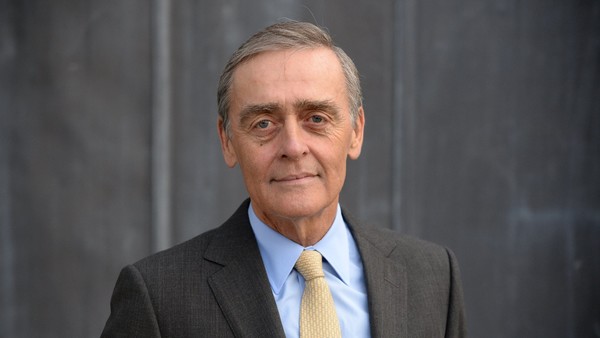
The Duke of Westminster, one of Britain’s wealthiest landowners whose estates include swaths of the most prime land in central London, has died aged 64.
Gerald Cavendish Grosvenor died on Tuesday afternoon at the Royal Preston Hospital in Lancashire after he was taken ill suddenly on his Abbeystead Estate, a spokeswoman said.
The duke was said to be worth around $10.8bn (£8.3bn), according to Forbes, making him the 68th richest billionaire in the world, and third in the UK.
The Sunday Times Rich List put the fortune of the owner of the Grosvenor Group, a private international property company, at £9.4bn. His company’s investment properties include almost 300 acres in Mayfair and Belgravia, exclusive districts near Buckingham Palace, much of which the Grosvenor family has owned since 1677.
The Grosvenor group also owns rural estates in England, Scotland, Wales and Spain, a substantial international property portfolio, and a renewable energy business.
The principal heir to the estate is Hugh Grosvenor, the duke’s son, who becomes the seventh Duke of Westminster.
 ©PA
The Duke of Westminster pictured in 2003 with the Prince of Wales at the launch of an affordable rural housing scheme
The 25-year-old is a godfather to Prince George and a former student at Newcastle University who since the start of this year has been working for a biofuels company, Bio-Bean. The duke also leaves three daughters and his wife, Natalia.
A spokeswoman said: “It is with the greatest sadness that we can confirm that the Duke of Westminster, Gerald Cavendish Grosvenor (64) died this afternoon at Royal Preston Hospital. He was taken there from the Abbeystead Estate in Lancashire where he had suddenly been taken ill.”
The Prince of Wales and Duchess of Cornwall were “deeply shocked and greatly saddened” by the duke’s death, a Clarence House spokeswoman said.
Buckingham Palace said: “I can confirm that Her Majesty the Queen is aware of the news about the Duke of Westminster. A message of condolence is being sent by the Queen and the Duke of Edinburgh.”
 ©PA
The Duke of Westminster receiving his Army wings from General Sir Michael Walker after executing a perfect helicopter landing into Netheravon airfield, Wiltshire, in 2001.
Born in 1951, Grosvenor spent his childhood in rural Northern Ireland before attending Harrow boarding school in London where he passed two O-levels in English language and history, according to a 1992 interview with Hunter Davies.
He was offered a trial for Fulham football club by George Cohen, the ex-England international, after impressing as a centre-forward but declined as his father objected to “all the kissing when they scored and . . . he preferred the oval ball”.
In his early 20s, on becoming trustee of the estate, he had been forced to abandon his dream of a career in the armed forces, satisfying his love of the military by serving in the Territorial Army for 42 years. He became the sixth Duke of Westminster at 27 after inheriting the title from his father, Robert.
The duke suffered a nervous breakdown and depression in 1998, later saying he had become exhausted from the pressures of business and public appearances.
He rarely gave interviews, but in 1992 spoke of how he was seeking to teach his son “self-discipline and a sense of duty”.
“He has to see himself as a caretaker, keeping the estates in good shape in his lifetime. It took me 10 years just to understand what I had inherited. It hasn’t been easy. A lot of it was in bad shape,” the duke said.
He also expressed a desire to have been born as “Joe Bloggs”. “Given the choice, I would rather not have been born wealthy, but I never think of giving it up. I can’t sell. It doesn’t belong to me,” he said.
The Duke added that he liked to live frugally. “I always pay cash for things like a car and try to get a good discount. I hate lights being left on. Last night, I went round switching all the lights off.”
Copyright The Financial Times Limited 2016. You may share using our article tools.
Please don’t cut articles from FT.com and redistribute by email or post to the web.
Source: Financial Times
Share this:

Discover more from #News247WorldPress
Subscribe to get the latest posts sent to your email.