

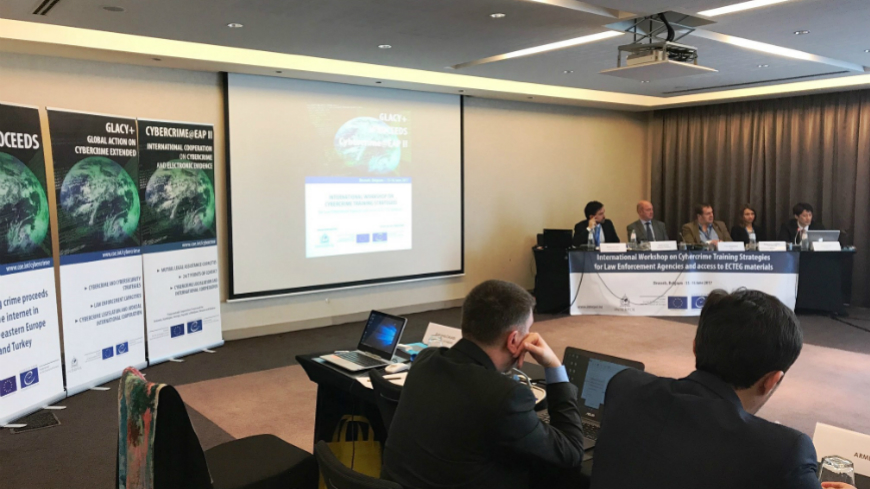
As information and communication technologies become more available, cybercrime and cyber-enabled crimes also become a more pervasive threat in people’s lives, business and public activities. In response to these trends, governments worldwide and law enforcement authorities in particular, need to increase their ability to investigate, prosecute and cooperate internationally on cybercrime and other cases involving electronic evidence.
The need for better cooperation extends beyond national authorities and private entities active in the field of cybercrime, but also at the level of international organizations in the work and programs that they carry out.
The European Union and the Council of Europe’s focus on cybercrime relies primarily on effective international legal instruments, in particular the Budapest Convention on Cybercrime, and on capacity building and support for countries worldwide to be able to make use of such tools and treaties. This overarching approach to cybercrime has also been highlighted in the “Capacity-building on cybercrime and e-evidence. The experience of EU/Council of Europe joint projects 2013-2017” paper prepared for the Meeting of the UN Intergovernmental Expert Group on Cybercrime that took place in Vienna on 10-13 April 2017.
Experience shows that priority countries of the Joint Projects of the European Union and the Council of Europe are in a better position to cooperate internationally on cybercrime and electronic evidence. For example, their cybercrime units, prosecution services and 24/7 points of contact have been linked up with counterparts in other jurisdictions as well as Europol and INTERPOL, which facilitates operational cooperation on actual cases.
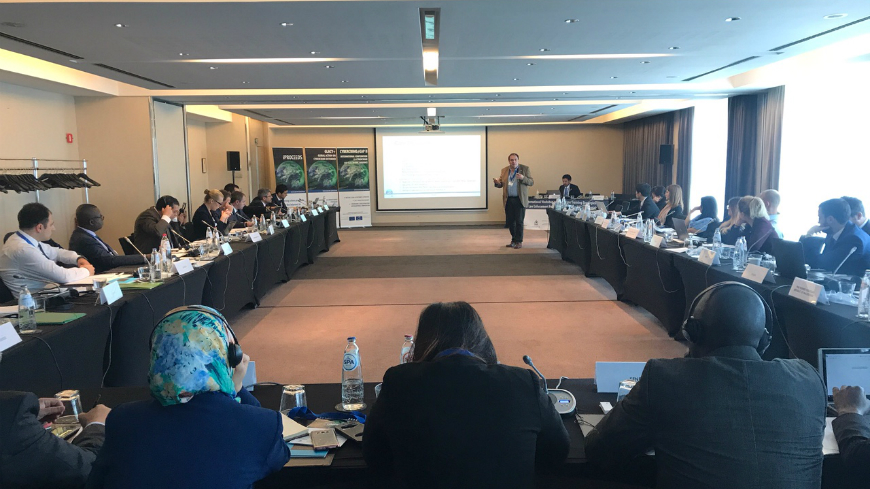
A further coordinated effort between these organizations aims to make available the training materials developed by the European Cybercrime Training and Education Group (ECTEG) to all the countries supported by current Joint Projects of the European Union and the Council of Europe: GLACY+ (implemented together with INTERPOL), iPROCEEDS and Cybercrime@EAP II.
Getting access to ECTEG materials will be facilitated by Council of Europe and further assistance provided to deliver these training courses at their national level.
All courses that have been developed for ECTEG are freely available only to the law enforcement community within the European Union and beyond. The purpose is to have a standardized approach to training linked with the Cybercrime Training Competency Framework and the Training Governance Model developed at the EU level.
Ensuring that law enforcement officers worldwide gain the resources they need to reach, maintain and further increase their response capacities is a practical advancement to keep up with the expanding cybercrime threat within the EU and beyond, made possible through the successful cooperation between international organizations.
By
Robert Williams
Editor in Chief
Share this:

Discover more from #News247WorldPress
Subscribe to get the latest posts sent to your email.